
Regulated Agency Vs Private Carer

My Elderly Parents Keep Falling. What Should I Do?
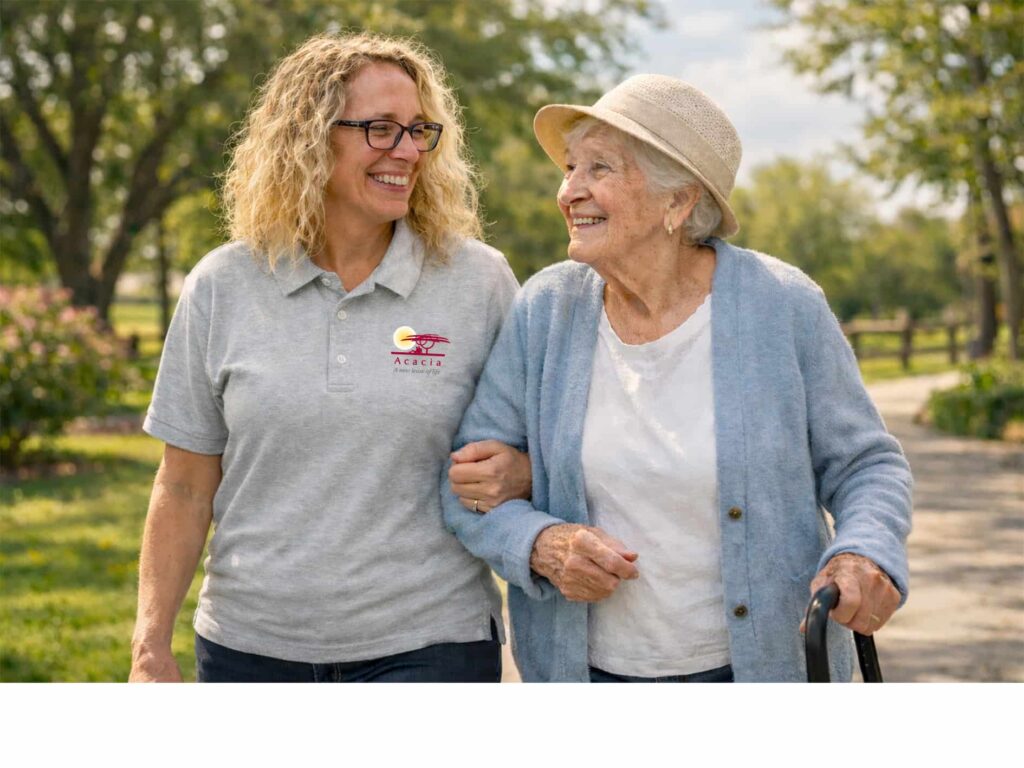
From Stroke Recovery to Independence: Delia's Journey.
The Recovery Summary:
Following a stroke in November 2024, and spending 5 months in hospital before coming home. The stroke that had affected her left side, mostly her feeling and mobility in her arm and leg. On May 1, 2025, Delia began a personalised program focused on regaining her morning routine with Acacia Homecare. Over seven months of dedicated home care, she progressed from daily assistance to full independence, eventually needing no further support. This story of resilience extended to her husband, John, who, following a hospital admission on March 24, utilised the same trusted care lead to achieve a rapid recovery, reducing his care needs in just 14 days. This case study explores the vital role of consistent communication, flexible care planning, and the goal of returning customers to independent living.
A Sudden change: Supporting Delia's Post Stroke Recovery
On May 1st, 2025, Delia’s family faced the news that no one is ever truly prepared for. Following a stroke, Delia returned home to find her world significantly altered. The stroke had primarily affected the left side of her body, turning simple, once-unconscious movements into monumental tasks.
For many, the physical impact of a stroke is compounded by the loss of routine. For Delia, her morning routine, the way she started her day and maintained her dignity, was suddenly out of reach without dedicated support. Her daughter, navigating the stress of her mother's new reality, reached out to Acacia Homecare to bridge the gap between hospital discharge and recovery.
Reclaiming Independence, One Step at a Time
Recovery from a stroke is rarely a straight line; it is a series of small, hard-won victories. When our team first began visiting Delia, the focus was on essential personal care and ensuring she felt safe within her own home.
However, over the next seven months, a transformation took place that went beyond mere assistance. Through consistent encouragement and a tailored care plan led by our Care Lead, Dee, Delia began to reclaim her strength.
-
Regaining Mobility: What started as assisted morning calls evolved into Delia finding the confidence to use her walking frame more effectively.
-
Building Confidence: Beyond the physical exercises, it was the "massive improvements" in her self-belief that truly changed the trajectory of her care.
-
A Mutual Bond: The relationship between Delia and her carers became a cornerstone of her recovery. She looked forward to the visits, and the feeling was mutual, our team saw her not just as a customer, but as a friend.
The Goal of Care, Working Towards Independence.
At Acacia Homecare, we believe the ultimate measure of success isn't how long a customer stays with us, but how much of their life they reclaim. Our philosophy is rooted in an approach to home care designed to help people do things for themselves, rather than having things done for them.
Delia’s journey is a perfect example of this philosophy in action. When care began, the goal was safety and support; as she grew stronger, the goal shifted toward autonomy.
Scaling Back as Strength Returned
Recovery is a fluid process, and a care plan should never be static. As Delia’s confidence returned and her mobility with her walking frame improved, her daughter worked closely with our team to ensure the level of support matched her mother's progress.
We didn't just maintain the status quo; we scaled back intentionally:
-
The Transition: After months of daily support, Delia moved to a five-day-a-week schedule.
-
The Final Milestone: Just one month later, this was reduced again to two days a week.
-
The Care Review: When our Care Lead, Dee, visited for a routine care plan review, it became clear that the process was working. Three weeks later, the conversation shifted from "managing" to "finishing."
"You Have Served Your Purpose"
The final call we received from Delia’s daughter was the best kind of news: "Mom feels she doesn’t need the carers anymore." She was more confident, more mobile, and ready to handle her routine on her own terms.
As Dee, our Care Lead, reflects:
"It was an achievement that took a lot of encouragement from the carers to get to that stage. It’s incredibly fulfilling to see the process from that initial phone call to the assessment, and then to the moment someone says they don't need care anymore. That is when you know you have served your purpose."
This is the "Acacia Way." We are here to provide a bridge back to independence, ensuring that when our care ends, it's because our customer have found the strength to walk across that bridge on their own.
Supporting the Whole Family: John’s Story
Care rarely affects just one person; it impacts the entire family ecosystem. While Delia was successfully regaining her independence, the family faced a new challenge on March 24th, when Delia’s husband, John, was admitted to the hospital due to Alzheimer's and was hositalised for 2 weeks.
In moments of crisis, the last thing a family wants to do is "shop around" for support. Having built a deep bond of trust during Delia’s recovery, the daughter reached out to Acacia immediately. She didn't want a stranger; she wanted the same level of compassion her mother had received.
Continuity of Care: The Value of a Trusted Face
Because we prioritize consistency, we were able to assign Dee as John’s Care Lead as well. Since the family was already familiar with Dee’s approach and communication style, the transition from hospital to home was seamless.
John’s care officially began on Friday, April 10th. Initially, he required one-hour morning calls to assist with his mobility and ensure he was settling back into his home environment safely, and wanted to remain independent as long as possible.
A Rapid Recovery Timeline
One of the most remarkable aspects of John’s story was the speed at which he regained his strength. Just as we did with Delia, we monitored John’s progress daily, looking for signs that he was ready to do more for himself.
-
April 10th: Care begins with 60-minute calls focused on mobility and settling in.
-
April 23rd: Only 13 days later, John’s improvement was so significant that his calls were reduced to 45 minutes.
Compassion as a Catalyst for Recovery
While not every recovery happens at the same speed as John’s, our goal remains the same for every individual: to achieve the highest possible level of independence through compassionate, professional support. J’s story highlights that when a family feels supported and a customer feels encouraged, the "road to recovery" can often be shorter than expected. We pride ourselves on being flexible enough to scale our services down the moment a customer shows they are ready to take that next step alone.
What Families Should Look for in Home Care
Choosing a home care provider is a deeply personal decision. As Delia and John’s stories show, the right support can be the difference between a long, frustrating struggle and a confident return to independence.
Based on our experience with families navigating recovery, here are the some non-negotiables you should look for when selecting a provider:
Transparent and Proactive Communication
In care, "no news" isn't always good news. Families deserve to be in the loop. At Acacia, we pride ourselves on being an open book.
-
Reliability: If a carer is running late due to traffic or an emergency, you should be notified immediately.
-
The "Right Fit": You aren't just hiring a pair of hands; you are inviting someone into your home. A provider should ensure the carer’s personality and skills are a "right fit" for your loved one.
Flexibility that Grows with the Customer
Recovery isn't static, so a care plan shouldn't be either. Look for a provider that is willing to increase or decrease calls based on real-time needs. As we saw with J, his mobility improved so rapidly that we adjusted his calls within just 13 days. A rigid schedule often hinders recovery rather than helping it.
A Focus on the "Exit Strategy"
It sounds counter-intuitive for a business, but a great home care provider should always be looking for ways to make themselves unnecessary. Whether it’s helping a customer master their walking frame or regaining the confidence to manage their own personal care, the goal should always be independence.
Reflections from the Family
The most meaningful feedback we receive doesn't come from data points, but from the voices of the families we support.

A Note from our Directors
"Our approach has always been centered on supporting each individual in the way that suits them best, while encouraging independence. We’re incredibly proud that our team helped Delia regain her confidence and strength to the point where she no longer requires our care services. It’s outcomes like this that truly make our work so rewarding." - Minal